When I first started building my portfolio, I did what most people do — I looked at other portfolios.
And that’s when I realized something: they all looked the same.
Most followed the same structure — a homepage with a list of skills, a project section with static screenshots, and maybe a contact page. They technically worked, but they didn’t speak.
They didn’t tell me anything about the person behind them.
That’s when it hit me.
A portfolio isn’t just a website. It’s a story.
And if I wanted mine to stand out, I had to stop treating it like a résumé and start treating it like what it truly was: a case study of me.
The Portfolio Problem: Why Most Feel Forgettable
When you work with data, one of the first things you learn is that context matters. A number on its own means nothing until you understand the story behind it.
Yet, most portfolios completely ignore this idea.
They list out skills:
✔️ “SQL, Python, Tableau.”
✔️ “Machine Learning, Data Visualization.”
They showcase projects:
✔️ “Built a dashboard to analyze sales data.”
✔️ “Used predictive modeling to forecast revenue.”
But they don’t tell you anything about the person behind them. They don’t show why someone built a project, how they approached it, or what they learned from it.That was the problem I wanted to solve. I didn’t just want to show what I had done — I wanted my portfolio to demonstrate how I think.
Treating My Portfolio Like a Real Data Project
I knew that if I wanted my portfolio to be different, I had to approach it the same way I would approach a real-world data challenge.
So, I applied a structured PACE (Process, Analysis, Communication, Execution) framework to guide my decisions:
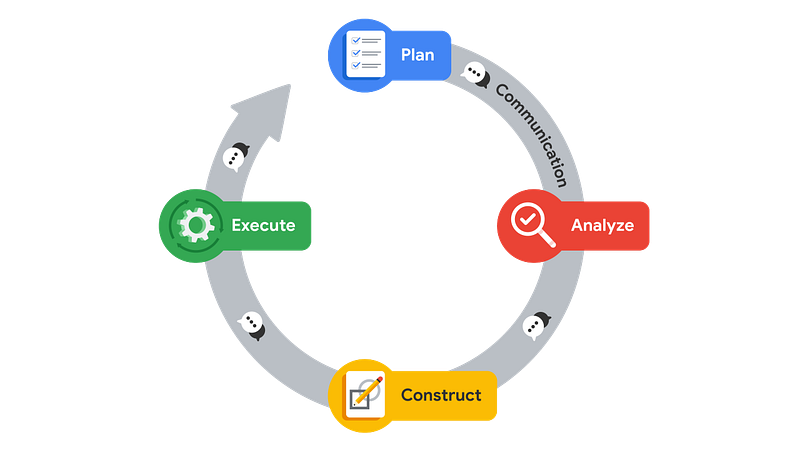
Process — Before writing a single line of code, I mapped out exactly what I wanted my portfolio to achieve.
Analysis — I researched what made other portfolios feel generic and identified gaps I could fill.
Communication — Instead of just listing projects, I focused on storytelling , making my work digestible and engaging.
Execution — I optimized everything for usability and presentation, making sure visitors could connect with my work rather than just scroll past it.
By treating my portfolio as an evolving project, I made it feel alive instead of just another static site.
Bringing Data to Life: My Personal Data Section
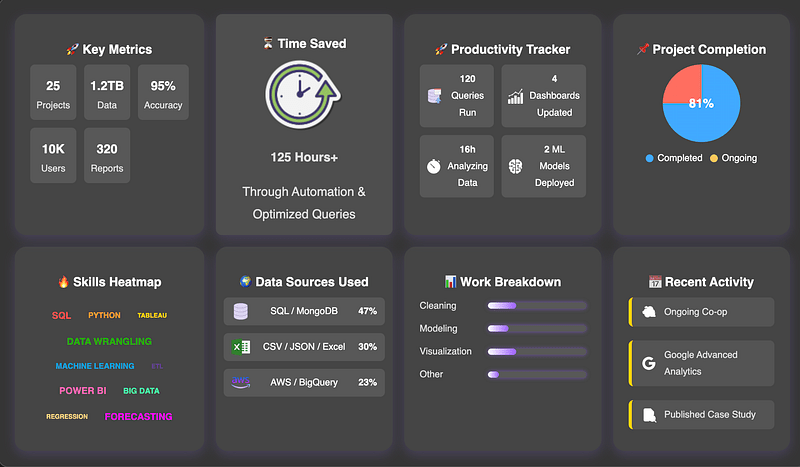
Since I work with data, I wanted to use data to tell my own story.
Instead of just writing “I have experience in SQL and Python,” I visualized it in a way that felt more natural.
💡 Instead of just listing skills, I gave them a visual presence in my portfolio.
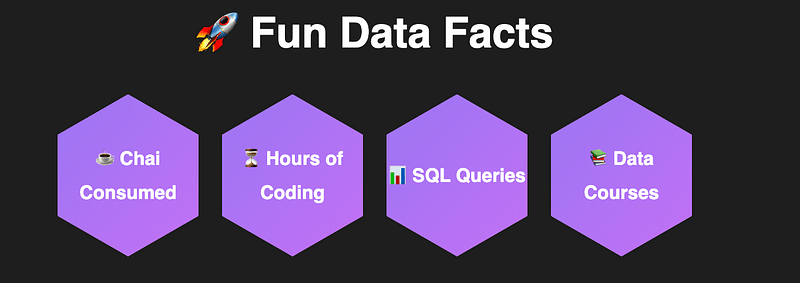
Beyond the Code: I also included a soft skills section — because data analysis isn’t just about numbers; it’s about making insights useful.
I wanted to showcase my skills in a way that felt more real, engaging, and reflective of my journey.
The result?
A portfolio that doesn’t just list what I do — it shows how I work.
Automating Portfolio Metrics Updates with Python
Since my portfolio includes a personal data section tracking things like coding hours, SQL queries run, and projects completed, I needed a way to automate updates rather than manually changing the numbers every time.
So, I wrote a Python script to dynamically update portfolio stats from a logging file that tracks my activity.
Here’s how it works:
1️⃣ It reads new metrics from a CSV log file where I track my progress.
2️⃣ It updates my SQLite database with the latest numbers.
3️⃣ It ensures my portfolio always reflects real-time progress.
The Python Script for Updating Portfolio Metrics
import pandas as pd
from sqlalchemy import create_engine

# Connect to portfolio database
engine = create_engine('sqlite:///portfolio_data.db')

# Load new data from a CSV log file (simulating progress tracking)
log_file = "portfolio_log.csv"  # This CSV stores new data entries
df_log = pd.read_csv(log_file)

# Fetch existing stats from the database
query = "SELECT * FROM portfolio_metrics"
df_db = pd.read_sql(query, engine)

# Update the metrics dynamically
df_db['coding_hours'] += df_log['new_coding_hours'].sum()
df_db['sql_queries_run'] += df_log['new_sql_queries'].sum()
df_db['projects_completed'] += df_log['new_projects'].sum()
df_db['chai_consumed'] += df_log['chai_cups'].sum()

# Push updates back to database
df_db.to_sql('portfolio_metrics', engine, if_exists='replace', index=False)

print("Portfolio data updated successfully!")
Where Do the Metrics Come From?
Instead of hardcoding values, I log my work in a CSV file that acts as a tracking system. Every time I complete a task (e.g., finish coding a project, write a new SQL query, or drink a chai 😆), I add an entry to this log file:
portfolio_log.csv

The script reads this log, calculates total progress, and updates my portfolio database automatically.
Lazy Loading for Faster Page Speed
To make my portfolio load faster, I implemented lazy loading so images and charts only load when they enter the viewport.
<img src="project_thumbnail.jpg" loading="lazy" alt="Project Screenshot">
The Challenges & Mistakes I Faced
Building a portfolio that actually feels personal isn’t as easy as just slapping on some visuals and calling it a day.
Here are a few of the biggest challenges I faced along the way:
Overthinking Every Detail: I spent too much time tweaking layouts, colors, and fonts, forgetting that content matters more than design.
Balancing Simplicity & Personality: I wanted my portfolio to be engaging, but not cluttered. Finding that balance took multiple iterations.
Not Getting Stuck in Perfectionism: At some point, I had to just publish it and remind myself that, like any case study, it can evolve over time.
These challenges reminded me that a portfolio isn’t meant to be “finished” — it’s meant to grow as I grow.
What I Learned From Treating My Portfolio as a Case Study
🔥 A portfolio isn’t just a showcase — it should evolve with you.
🔥 People don’t just connect with skills; they connect with stories.
🔥 If you work with data, use data to tell your own story.
Final Thoughts: Your Portfolio Should Feel Like You
Most portfolios are built to impress recruiters.
But the best portfolios? They feel like an extension of the person behind them.
I didn’t want mine to feel like a job application. I wanted it to feel like an invitation to understand how I think.
If you’re working on your own portfolio, don’t just ask:
“Does this show my skills?”
Ask: “Does this actually represent me?”
Because at the end of the day, a portfolio isn’t just about what you’ve done — it’s about who you are as a thinker, builder, and problem-solver.
So, make yours count.
👉Check out my portfolio here: ramishfatima.com
What’s the biggest challenge you faced while building your portfolio? Drop your thoughts in the comments — I’d love to hear about it!
 Ramish Fatima | Data Analyst | SQL, Python & Business Intelligence
Leave a comment