Analytics has the potential to evolve far beyond its current capabilities. Agentic AI opens pathways for analytics systems that could think, iterate, and act with minimal human input, representing one of the most significant evolutionary possibilities for how businesses could understand and respond to data.
The Next Stage of Analytics Evolution
Traditional analytics encompasses predictive modeling, real-time monitoring, automated reporting, and machine learning algorithms that process data and generate insights. These systems can identify patterns, forecast trends, and trigger alerts based on predefined conditions.
Agentic AI could enable systems that go beyond analysis to autonomous action , systems that iterate and act with minimal human input. This evolution could bring:
- Iterative planning through continuous data reassessment
- Context-aware decision making that adapts to changing conditions
- Proactive execution of routine business actions
Consider the possibilities: autonomous supply chain optimization (Unilever reduced forecasting errors by 30%), self-adjusting financial models (JPMorgan Chase uses real-time market predictions), and dynamic dashboards (ThoughtSpot’s Spotter for inventory anomalies).
How Agentic AI will Transform Analytics Capabilities
Current analytics tells you “sales dropped 15% in Q3.” Agentic AI could automatically drill down to discover it was specifically due to supply chain delays in the Northeast region, cross-reference this with weather patterns and competitor pricing, then suggest shifting inventory from the West Coast warehouse while negotiating expedited shipping rates.
From Static Reports to Dynamic Investigation
Instead of generating the same monthly dashboard, agentic analytics could notice that customer churn typically spikes 3 days after a specific type of support ticket, automatically investigate which support agents handle these cases, and propose specific training interventions.
From Manual Model Updates to Self-Learning Systems
When JPMorgan Chase’s trading algorithms detect unusual market volatility, an agentic system could automatically adjust risk parameters, hedge positions, and even temporarily pause certain trading strategies ,all without human intervention.
From Reactive Analysis to Predictive Action
Unilever reduced forecasting errors through autonomous demand sensing systems that predict fluctuations, source alternative suppliers during disruptions, and optimize logistics routes without human intervention.
Scenario: Marketing Campaign Performance Drop
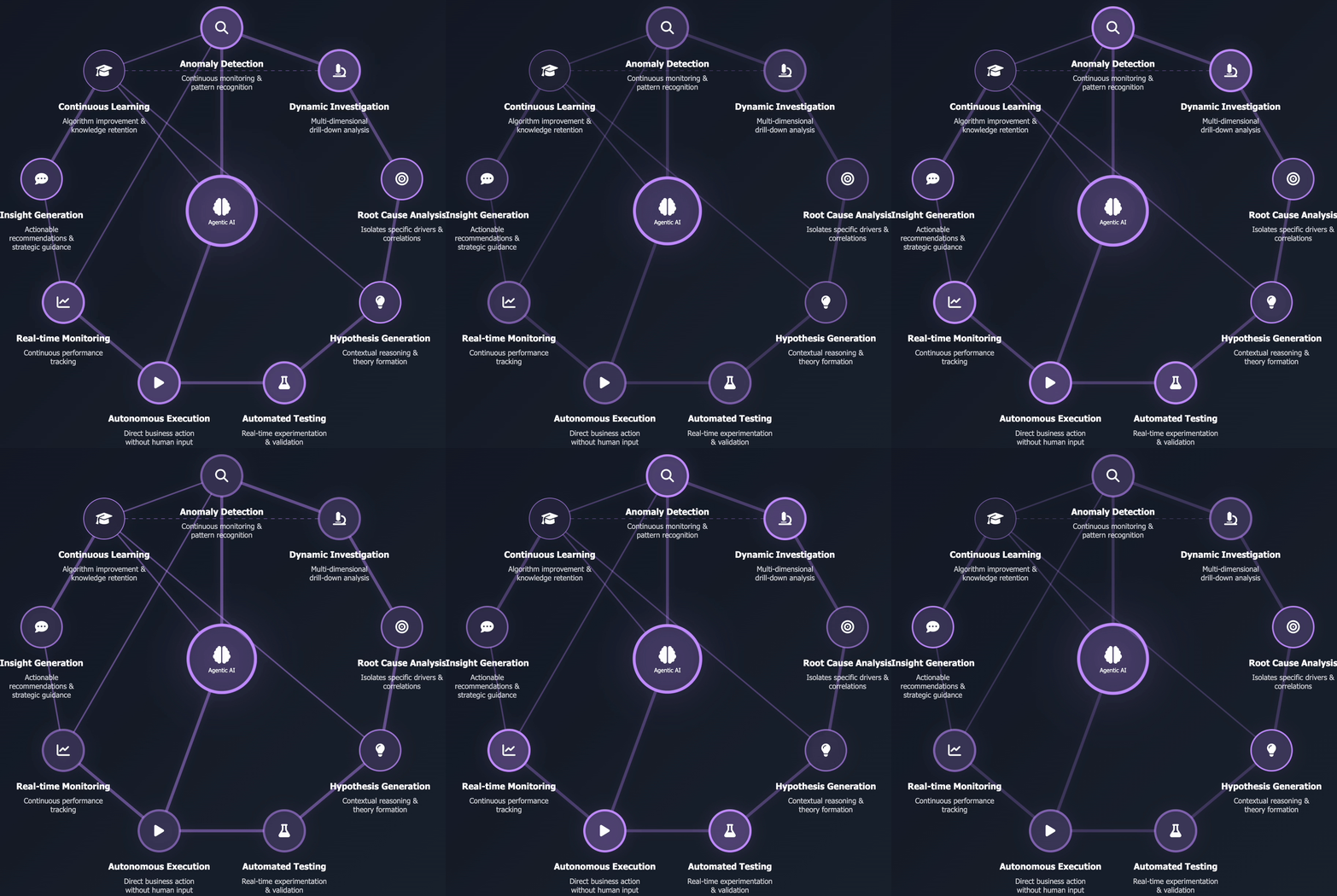
Agentic AI Response Chain:
- Detects: Campaign CTR dropped 15% over past 48 hours
- Investigates: Segments data by demographics, device, time, geography
- Identifies: Drop isolated to users aged 25–34, specifically on weekends, mobile devices
- Hypothesizes: Weekend mobile behavior different from weekday patterns
- Tests: Automatically launches A/B tests with 3 alternative creatives for this segment
- Executes: Reallocates 30% budget from underperforming segments to better-performing ones
- Monitors: Tracks performance of new creatives in real-time
- Recommends: Sends creative team specific insights about what resonates with 25–34 weekend mobile users
- Learns: Updates targeting algorithms based on results for future campaigns
This isn’t about better charts or faster queries , it’s about analytics that can actually solve problems autonomously rather than just highlighting them.
The Evolutionary Path
Automating data cleaning & enrichment
Detecting anomalies in real-time
Personalizing dashboards for each user
Self-optimizing dashboards that highlight emerging trends
Predictive overlays showing likely future scenarios
Automated insights generation via integrated NLP
Challenges in Evolution
Potential challenges like bias and integration complexity could emerge, but solutions are developing. Explainable AI frameworks could make decision processes transparent. APIs and middleware could enable gradual migration while maintaining business continuity.
The Evolutionary Horizon
🔮 IoT + Agentic AI = Decentralized Intelligence
🔮 Fully autonomous analytics could mean less grunt work, more strategy
🔮 Multi-agent collaboration could bring unprecedented organizational intelligence
The Data Analyst Evolution
From Query Writers to Workflow Architects
Analysts will transition from writing individual SQL queries to designing multi-step analytical workflows that AI systems can execute autonomously.
Hypothesis Design vs. Hypothesis Testing
Instead of manually testing hypotheses, analysts will design frameworks that automatically generate and test hypotheses based on emerging data patterns.
AI Data Analyst Hybrid Role
A new specialized role combining traditional analytical skills with AI system management and prompt engineering capabilities.
Business Context Translators
Analysts evolve from solving technical problems to framing complex business challenges in ways that AI systems can understand and act upon.
AI System Orchestrators
Managing multiple AI agents working together rather than performing analysis directly, balancing technical frameworks with business goals.
Manual data cleaning (80% of their current time) → Data quality framework design (teaching AI systems how to clean data)
Writing ETL scripts → Designing automated data pipelines that self-correct
Fixing data errors reactively → Building proactive data monitoring systems
This transformation represents analysts moving from being operators of analytical tools to architects of intelligent systems that can analyze, learn, and act autonomously.
 Ramish Fatima | Data Analyst | SQL, Python & Business Intelligence
Leave a comment